A scene borrowed from sleeping packs
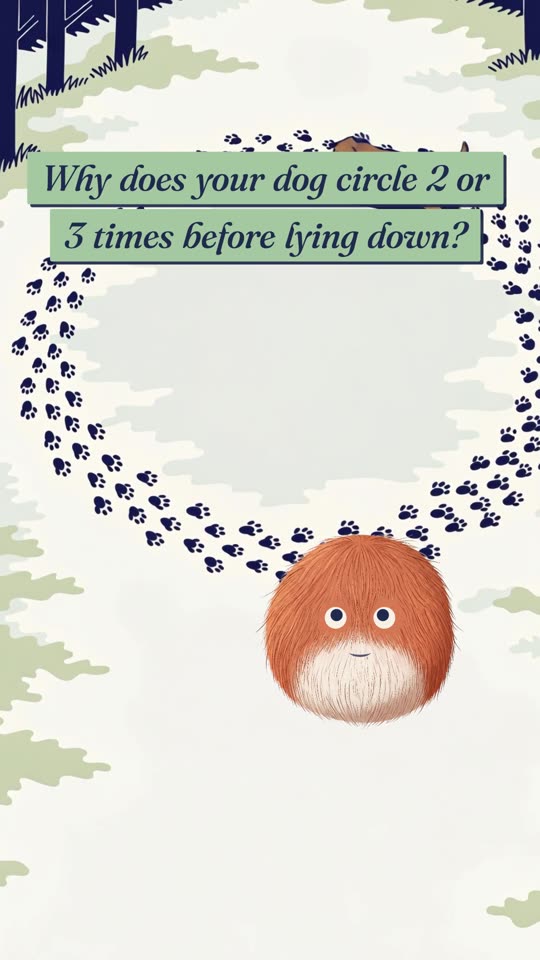
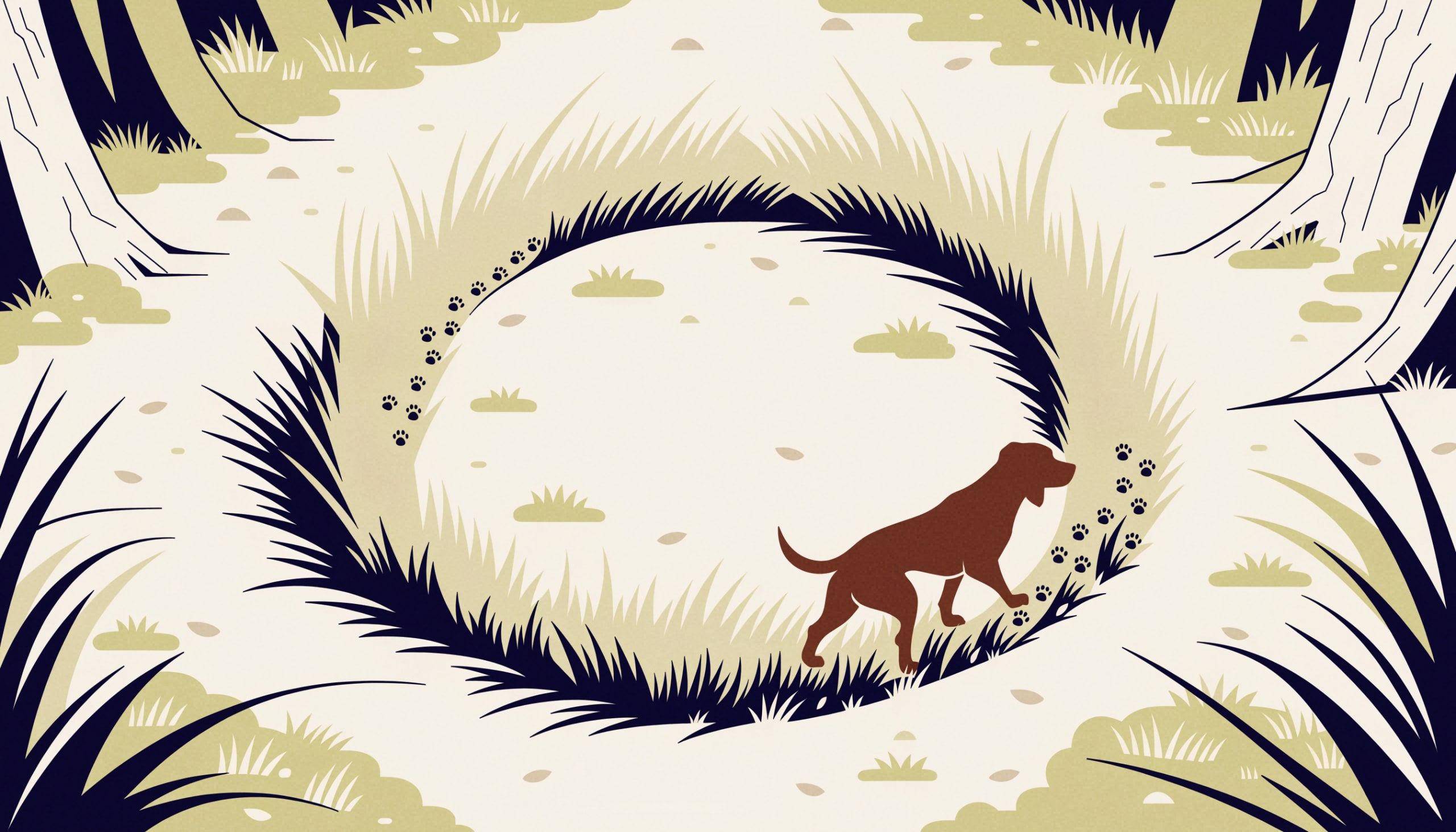
When a dog walks two or three slow circles before dropping its muzzle onto its paws, it is replaying, without knowing it, a scene tens of thousands of years old. The domestic dog is, genetically, a wolf, and a wolf does not sleep just anywhere. Before lying down, it tramples its chosen patch to flatten the tall grass, snap any twigs, expose the bare earth underneath. It carves itself a hollow. And, in the same motion, it scares off whatever might be waiting in that hollow: insects, ants, sometimes a sluggish viper.
That circular sweep also serves a function we tend to forget: it lets the animal turn its body into the wind. For a creature sleeping outdoors, the nose is a watchman: it is through the nose that the smell of a predator will arrive. Spinning a slow loop is a way of doing a panoramic sweep of the surrounding scents before settling on a heading, and lying down knowing where trouble would come from.
What the turn still settles
Beyond cleaning the bed, the spin handles a few quiet adjustments nobody really teaches us to see. It helps the dog feel the warmth of the ground: one side in the sun, one side in shade, and the rotation lets the animal pick. In a pack, it also negotiates who sleeps where, and against whose back. The gesture is ethological before it is cute.
A 2013 study published in Frontiers in Zoology showed that dogs, when they are off-leash and the Earth’s magnetic field is calm, tend to align themselves along the north-south axis when they urinate and defecate. The result hasn’t been confirmed by every replication, but it is a useful reminder that, beneath the apparent randomness of a circling dog, there is often a sensor we cannot see.
Why the gesture survives a parquet floor
There remains a question: why does a dog still do it on an already-flat cushion, in a living room with no ants and no wind to face? Because the behaviour, after being useful for so many millennia, has become a bedtime ritual. The gesture prepares the body for sleep, the way we pull a duvet up to ourselves before sinking under it. It signals to the body: this is the place, this is the moment, you can let go.
A gesture that no longer serves a purpose has not lost its meaning.
A dog sleeps on average twelve to fourteen hours a day, in short bouts rather than one long night. Across a life, that adds up to tens of thousands of bedtimes. As many small, silent ceremonies in which it walks, every time, the same patient circle — the one its ancestors walked in a grass that no longer exists.
The other member of the household makes a different mystery, down in its throat. Why do cats purr?