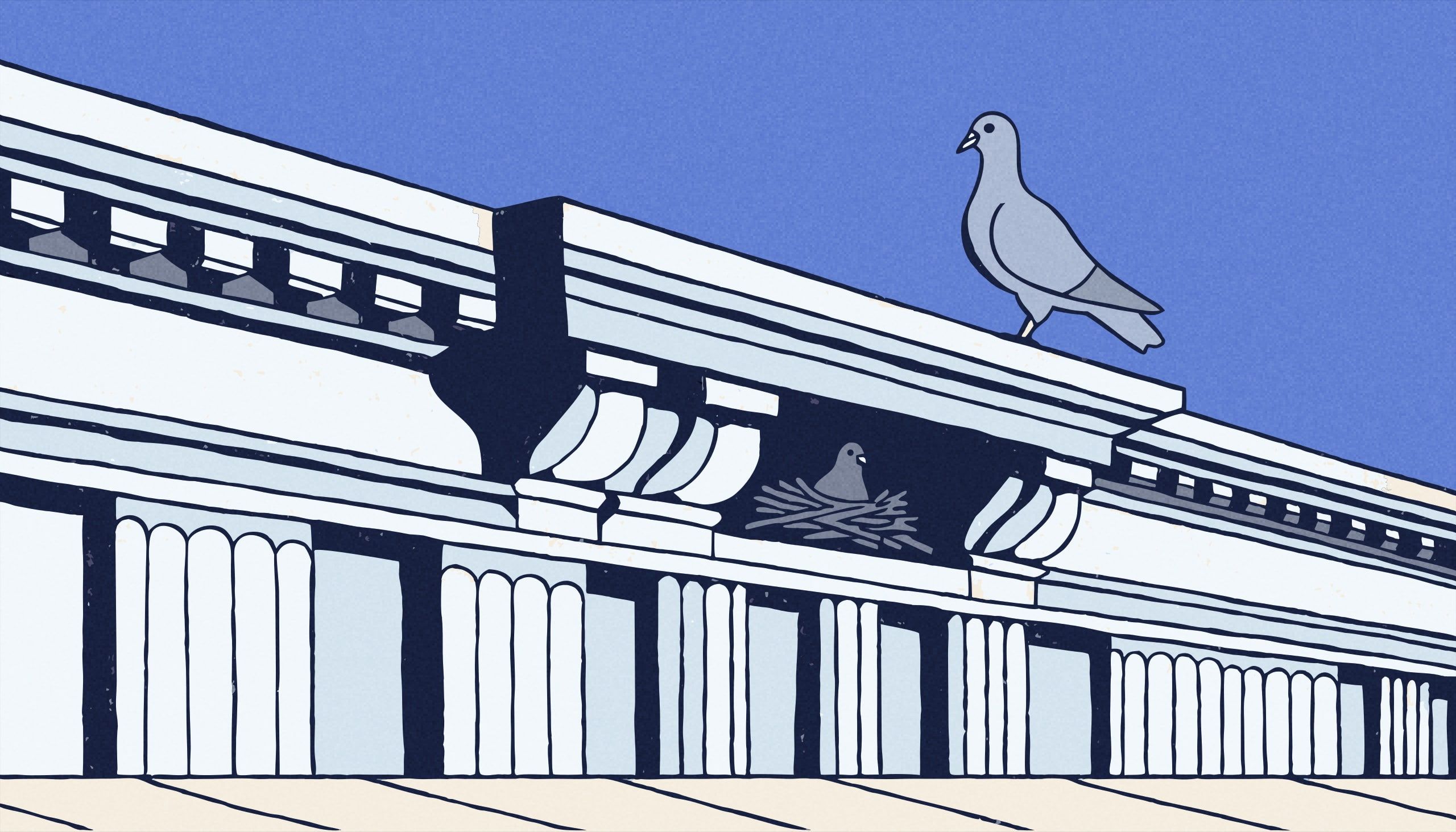
A cliff-side nest, right in the middle of the city
You’ve seen thousands of pigeons. On squares, on ledges, on statues. Never a baby. That is no accident, and it begins a long way from the city. The city pigeon descends from the rock dove, a bird that nested in the cliffs and sea caves of rocky coasts. It never changed its address, only its scenery: a building cornice, the underside of a bridge, the dark corner of a car park — to a pigeon, that is the same thing as a hollow in the rock. High, sheltered, out of reach.
In other words, a pigeon nests exactly where you never think to look. You share the pavement with it, but not its cliff. Its eggs, then its chicks, spend their first weeks in a recess no one ever crosses at street level.
Chicks that take their time
And these chicks are in no hurry to leave. Where a sparrow quits the nest in a fortnight, a young pigeon stays for close to a month — often twenty-five to thirty-five days. That is a long time for a bird, and it is possible thanks to a surprising detail: both parents, male and female, make a kind of milk. Not a mammal’s milk, but a rich secretion produced in the crop — the famous “pigeon milk” — which they feed to their chick in the first days. This very rich food is delivered in just a few meals, far fewer trips than a songbird ferrying insects, so the nest stays all the quieter.
The upshot: the young pigeon grows sheltered, fed and hidden, while the world passes below without the faintest idea.
You’ve been mistaking them for adults
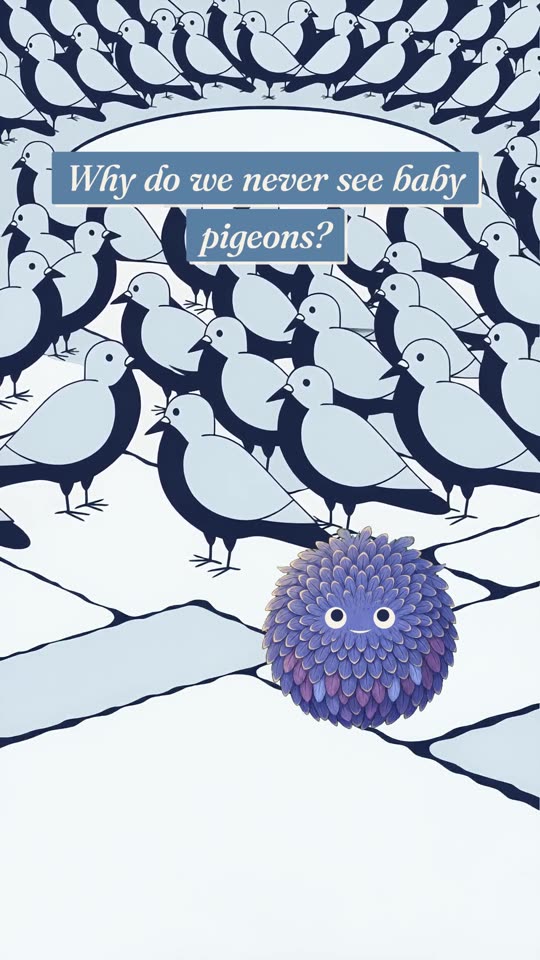
Then comes the day it leaves. And that is where the trick finishes: when a young pigeon finally quits its nest, it is already almost adult-sized. No yellow down, no clumsy waddle that would shout “baby.” Just a slightly duller pigeon, its eye still matte, its plumage not quite carrying its parents’ sheen.
An adult pigeon is a baby that simply hid its childhood well.
So you have already crossed paths with dozens of them. You looked without seeing, filing them away as grown-ups on sight. The next one you catch pecking at crumbs, look at its eyes and the flatness of its feathers: maybe it has only just come down from its cliff. Like the dog that circles before lying down, the pigeon carries an old gesture inside it; it has simply, on top of that, learned to grow up with no witnesses.
You cross paths with baby pigeons every week. They have only already got the look of grown-ups.