Daylight goes out, and the song with it
8 April 2024. A band of shadow crosses North America, from Mexico to Newfoundland. Beneath it, in Indiana, darkness settles in the middle of the afternoon and holds for four minutes and fifteen seconds.
Researchers from Indiana University had seeded the path with microphones, and handed an app to thousands of onlookers. Close to 100,000 bird calls were recorded that day, then sorted by an automatic recognition program. The result, published in Science in October 2025, is unambiguous: of the 52 species tracked, 29 changed how often they called before, during or after the Moon went by.
Many dropped their volume, then stopped. The soundscape hollowed out, as though someone had turned a dial.
What strikes you isn’t the silence alone. It’s how little it took. Four minutes.
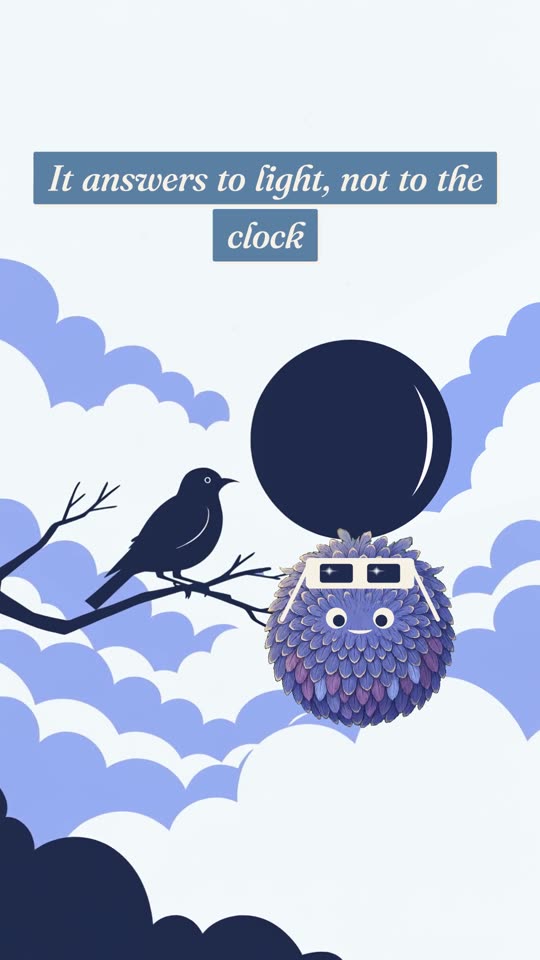
A clock that answers only to light
A daytime bird doesn’t sing when the mood takes it. It sings when the light tells it to.
Inside its skull, a biological clock keeps the body in step with day and night: the circadian rhythm. What sets that clock is the brightness entering the eye. At dawn, that brightness makes melatonin collapse, the hormone tied to sleep. The level drops, the bird wakes, the song begins. It’s the very mechanism behind the chorus you hear under your window each morning.
Now cut the light in mid-afternoon. The eye passes on exactly the signal of dusk. And the clock cannot read an astronomical calendar: it knows only the signal it receives. Night, therefore silence.
The chorus that greets a false dawn
The telling part comes when the Sun returns.
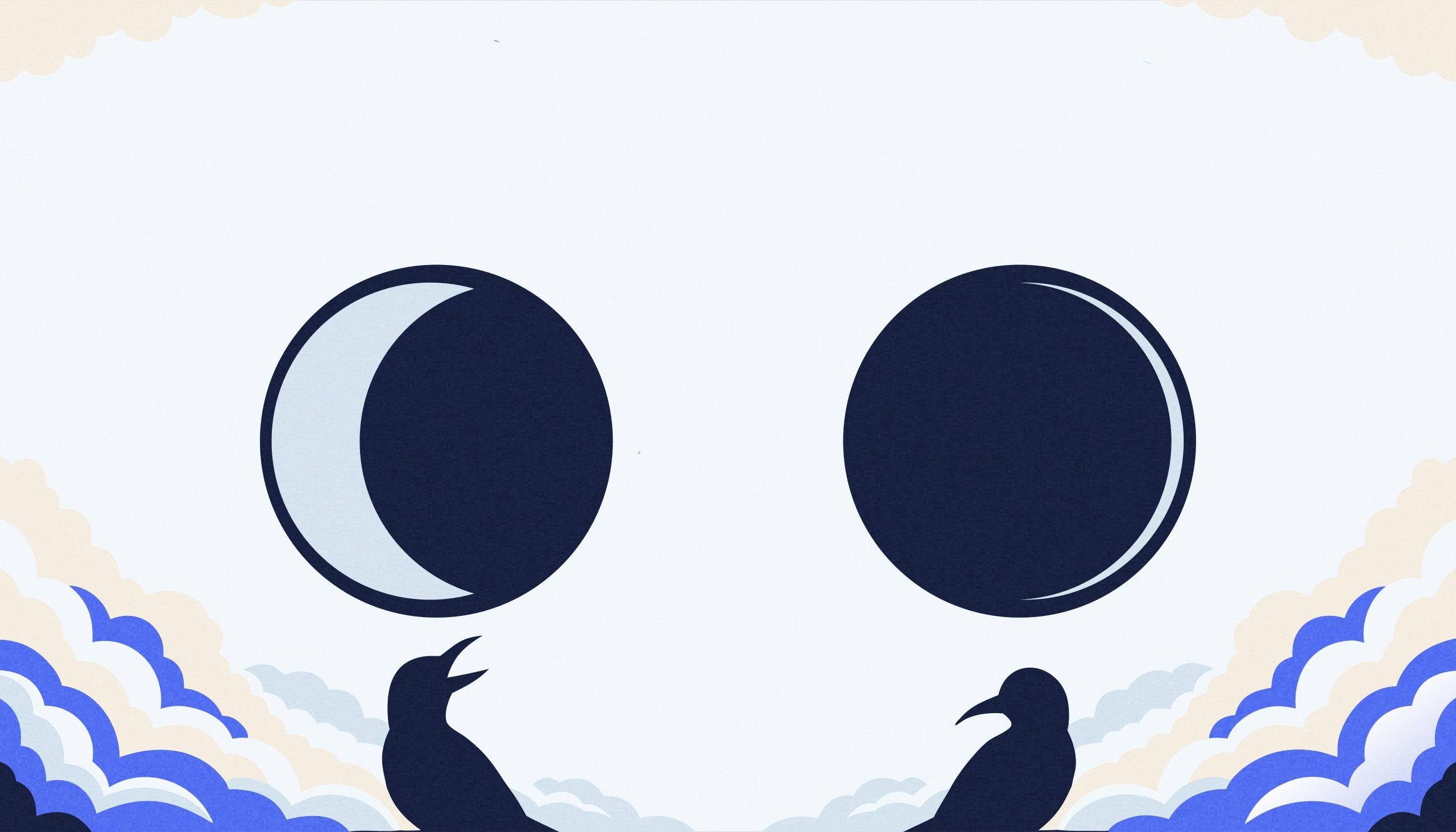
As the first sliver reappears from behind the Moon, melatonin drops again, and the birds start up together. Ornithologists call it the false dawn chorus: a complete sunrise, played in seconds, in the thick of the afternoon.
That detail settles the question of fear. A frightened animal goes quiet and stays hidden. An animal whose clock has been fooled picks up the morning routine exactly where it was interrupted. Other creatures travel the opposite way at the same moment. During the 2017 eclipse, frogs and crickets were heard calling through totality, and at a zoo in South Carolina roughly three species in four shifted into their end-of-day repertoire. They read the light too, simply in the other direction.
What was actually heard on 12 August 2026
That evening, the band of totality descended from the Arctic, crossed Greenland, brushed Iceland and reached mainland Europe only through northern Spain. Everywhere else on the continent saw a partial eclipse, late in the day, with the Sun already low.
Deep, but partial. According to IMCCE figures, obscuration across France ran from 89.7 % near the German border to 99.7 % at the Spanish one, with 92 % in Paris and 96 % in Marseille. Northern Spain and the Balearics fell inside the path of totality; Britain, Germany and Scandinavia stayed well below it.
That distinction decided everything. A second study, run by the Cornell Lab of Ornithology across a continental network of recorders, measured the threshold: birdsong only drops off significantly beyond 99 % obscuration. Below that, enough light remains for the clock to hold. Which meant that almost everywhere in Europe, the birds simply carried on.
And even under genuine totality, the silence is never complete. In 1963, a Cornell Lab team recorded a total eclipse from a quiet spot: the singing thinned out markedly, but some species never quite stopped.
The same eclipse season delivered another a fortnight later. On the night of 27 to 28 August 2026, a partial lunar eclipse darkened the Moon rather than the Sun. Daylight stays untouched during a lunar eclipse, so no bird’s clock has anything to misread. The deep copper colour of a totally eclipsed Moon has a reason all its own.
Listen anyway
At the next solar eclipse, don’t wait for the great hush, you’ll only be disappointed. Listen instead for a retreat: a song losing volume, hesitating, spacing out as the light cools. An evening played too early, and only halfway.
If the blackbirds on your street seem to be wrapping up ahead of schedule, it isn’t the hour that changed. It’s their clock, blinking.