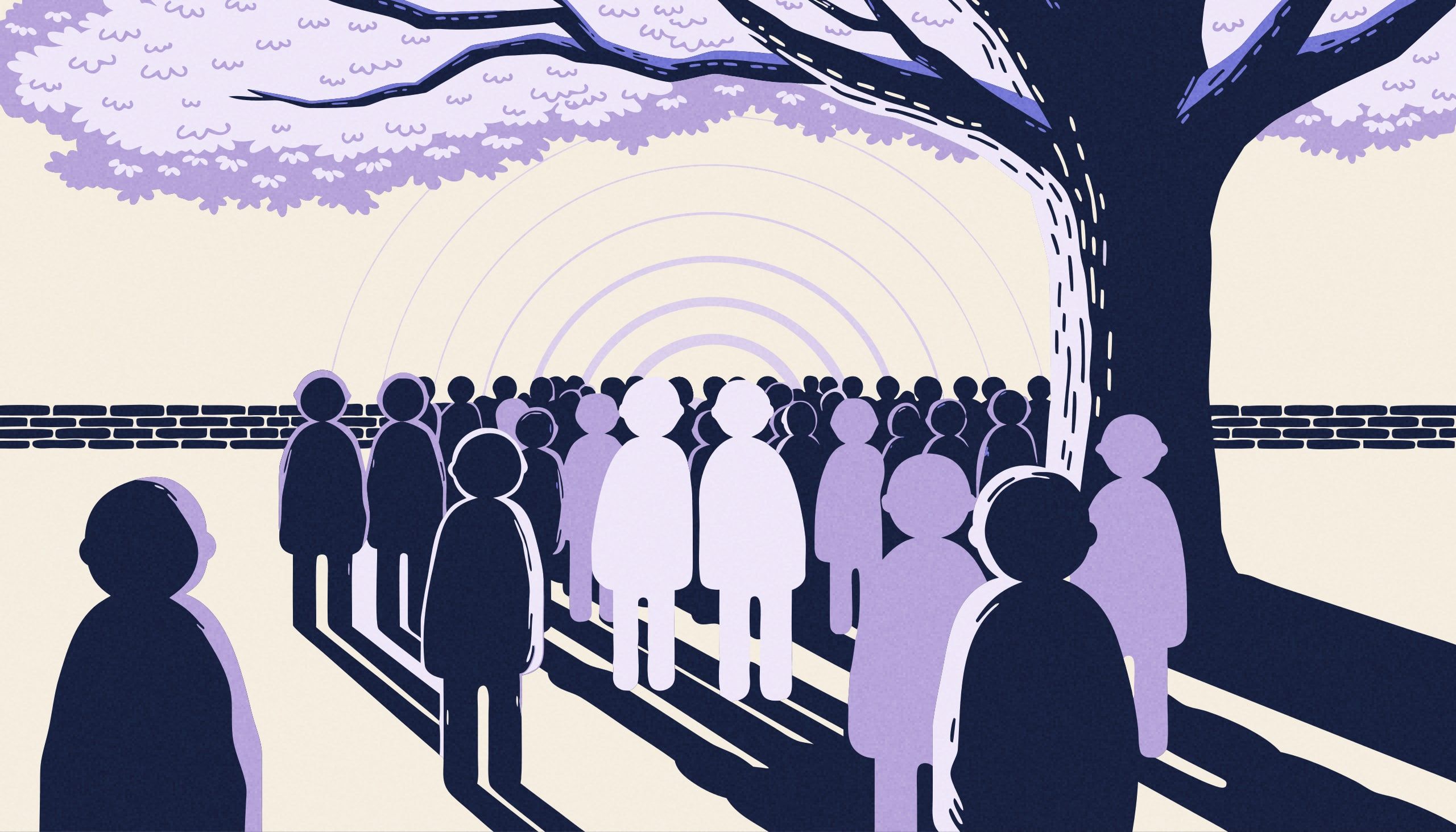
The calendar sets the signal
Mid-September. Three people in one household are blowing their noses. The eldest started, the younger one followed, a parent brings up the rear. Nobody “caught a cold” together. It’s a cascade: a virus entered through school, relayed from one person to the next.
The calendar confirms it. A Canadian study of asthma hospitalisations (1990 to 2002) places the peak among school-age children at 17.7 days after the start of the school year. Toddlers follow 1.7 days later. Among adults, it arrives roughly six days after the school-age peak.
What changes is the web of contacts
On the first day of school, the weather hasn’t shifted. What reconfigures is the contact network.
In summer, children scatter. Rhinovirus, responsible for half to two-thirds of our colds, still circulates: it tops summer sampling results. But it finds few routes.
On the first day back, classrooms reassemble everywhere at once. A European survey (7,290 participants) confirms it: students mix mainly with other students, and their contacts peak between ages 10 and 19. Yawning spreads through such crowds too, by imitation, with no pathogen involved.
Proof that school triggers the surge, not the season: school holidays, including those in midwinter, reduce the rate at which influenza is transmitted to children by 20 to 29%. This is French data. No effect was detected on adult contact patterns.
Why two and a half weeks
Two days per jump. That is the median incubation period of rhinovirus. It takes several jumps for one infected child to reach a whole classroom, then for that classroom to seed others, and for the peak to become visible at population scale. The relays stack up.
The child opens the door
The child comes home. Another network waits, smaller, tighter. One study followed 26 households for a year with weekly nasal swabs: children under 5 harbour a detectable virus far more often and for longer. Living with children adds roughly three weeks per year of nasal viral detection compared with a one-person household.
Adults arrive next, shifted by a few days. Within the household, measurable transmission passes through children and those with symptoms.
The season does not give the signal. The calendar does. The same virus circulates in July without producing a peak: nobody opens the door to it at the same time. The first day of school opens every door on the same morning.