The foot leaves before you do
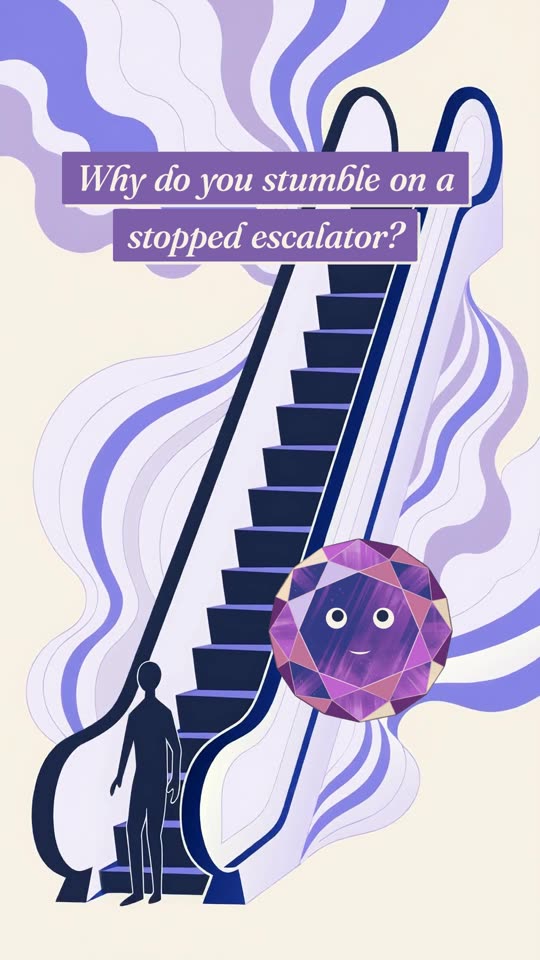
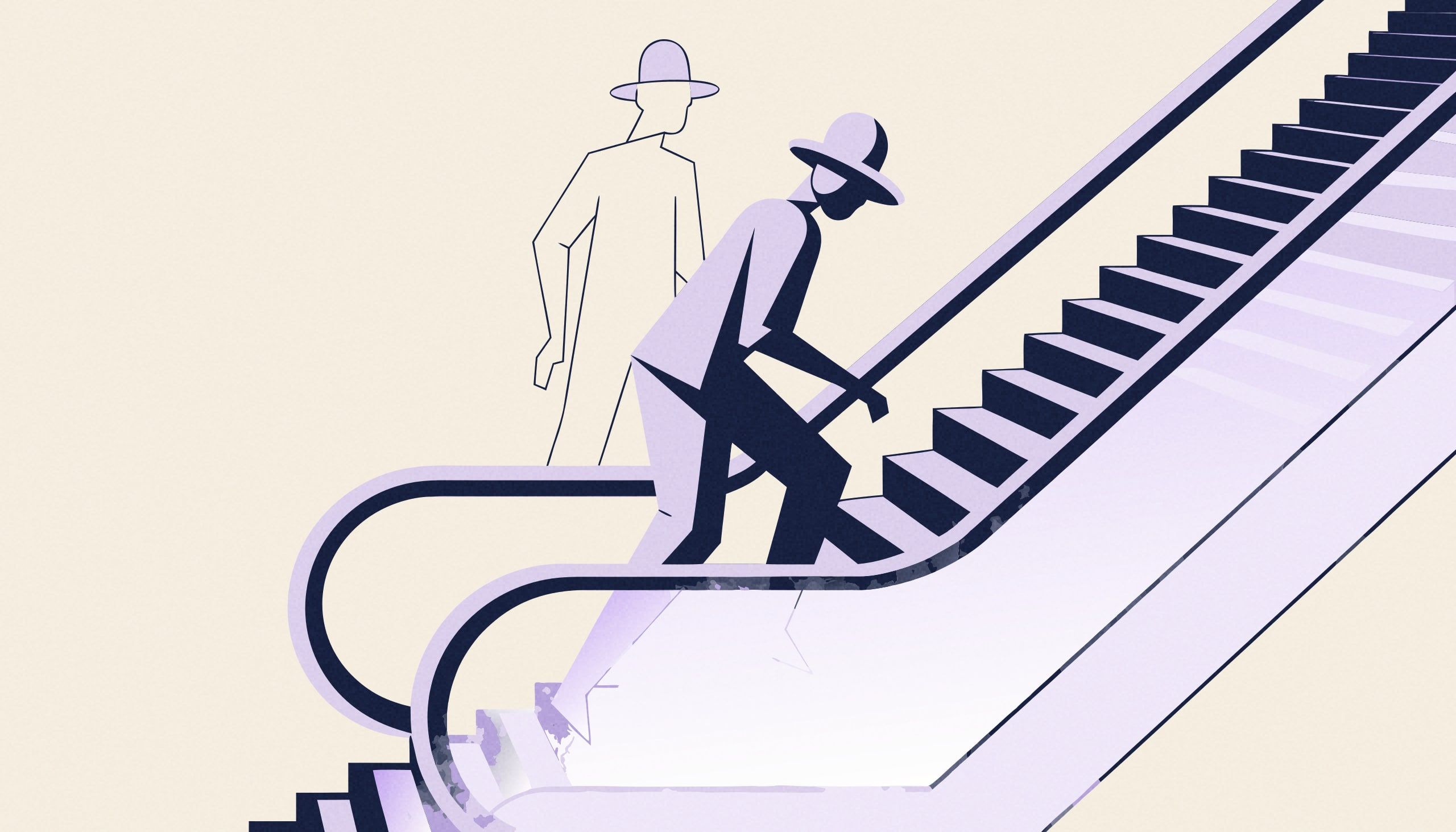
The escalator is broken. You can tell at a glance: the steps frozen, the rubber ribbon still. You step onto it as onto a plain staircase. And yet, at the very first step, your body throws itself forward, your arms reach for the handrail, your head sways for a fraction of a second.
It makes no sense. You know nothing is moving. So why this little stagger?
The British researchers who studied it gave it a name: the broken escalator phenomenon. And it says a great deal about how your brain handles balance: not by working things out on the spot, but by betting in advance.
A brain that bets on the future
Stepping onto a moving escalator is no small thing for the body. The belt carries you upward, and to keep from toppling backward, your brain tips the trunk slightly forward and tightens the leg muscles. It learns this little adjustment fast, in barely a few rides.
The trouble is that this learning leaves a trace. Your brain files the move away in a drawer labelled “escalator”, ready to pull out the moment an escalator appears.
That is where the stumble happens. This prepared reflex is called a motor programme: a sequence of moves the body triggers in one block, without going back through thought. Faced with an escalator, even a stopped one, the programme fires. The body leans forward to offset a push that never comes. The result: you shove into nothing and set off too fast.
Knowledge against reflex
The most unsettling part is that it works even when you’re warned. In the experiments, the volunteers knew perfectly well the escalator wouldn’t move. They’d been told, they’d watched it stop. Their foot staggered all the same.
That’s proof that two memories live in the brain, and don’t always talk to each other. There is the conscious memory, the one that reads the situation and says “careful, it’s off”. And there is the memory of the move, tucked in the circuits that drive the muscles, deaf to warnings. The first may shout all it likes, the second decides faster.
The body obeys habit before it obeys reason. And habit takes several passes to fade: the stagger shrinks if you repeat the exercise, until it’s gone.
A signature of the whole body
This little false step is no embarrassing bug. It’s a window onto a general rule: your balance doesn’t react to the world, it anticipates it. When you step off a last stair that isn’t there and your leg slams down hard, it’s the same mechanism. The brain had planned one more step.
The same logic explains the sway you keep after a long boat crossing, or the strange feeling stepping off an airport walkway. The body keeps correcting a motion that has stopped.
You don’t stumble because you got it wrong. You stumble because your brain, for its part, was sure it was right.