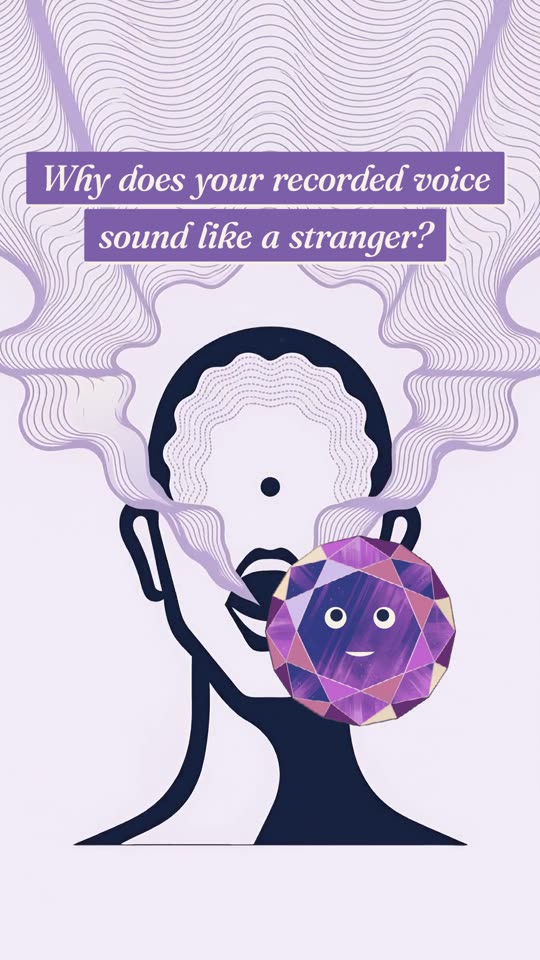
You actually have two voices
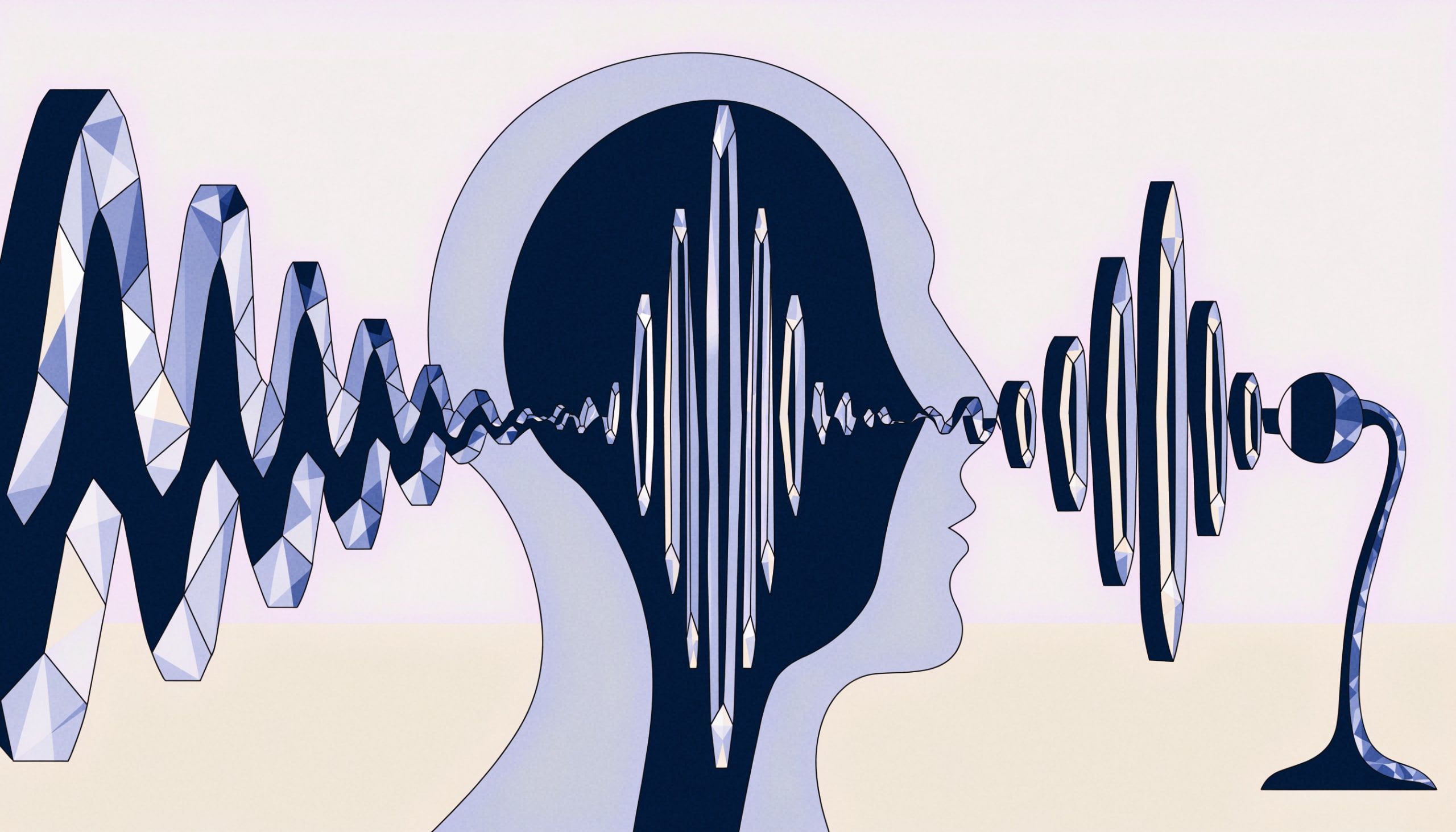
When you speak, your vocal cords vibrate and produce a sound that leaves through your mouth, travels through the air, curves around your head and reaches your ears. That’s the air-conducted voice, the one everyone around you hears. But the same sound doesn’t only escape outward: it makes your skull vibrate. Your jaw, your sinuses, the bones around your inner ear are set in motion directly by your vocal cords, just centimetres away, without needing to travel through air at all.
This second route, called bone conduction, reaches your inner ear at the same point as the air-borne route, at the same time. To your brain, the two signals arrive fused into one sound: your voice. What you hear when you speak isn’t your voice on its own. It’s the sum of two layered voices that you take for one.
Bone is a low-frequency speaker
Bones transmit low frequencies especially well. That’s why, at a concert, you feel the bass in your chest more than you hear it. The vibrations passing through your skull as you talk add, on top of the air-borne voice, a layer of quiet warmth that no one else can perceive.
A 2010 study published in the Journal of the Acoustical Society of America measured the gap precisely. Depending on the sounds being uttered, the voice as you hear it from the inside can differ from the one heard externally by several decibels, particularly in the lower and mid-range frequencies that give a voice its colour. You hear yourself in intimate stereo; you come out in mono.
A recording finally shows you your real voice
A microphone, by contrast, only captures the air-borne route. It records your voice as others hear it, without the bass your skull was adding. The first time you hear the recording, your brain, expecting the familiar mix, gets a voice with its low end stripped out. Brighter, thinner, vaguely foreign.
It isn’t your voice that sounds strange — it’s the voice you thought you had.
Psychologists call this discomfort the “voice confrontation effect”, studied as early as 1966: the first time you hear your own voice played back, you tend to find it less attractive, higher pitched, slightly off. Over time, the unease fades, because the brain eventually accepts this new version as just as valid. The mirror had done the same thing with your face, a few years earlier.
What you hear on the recording, then, is not a distortion. It’s, for the first time, you as everyone else has heard you all along.
A machine listening to that same voice runs into a very different wall. Why does a voice assistant struggle to truly understand?