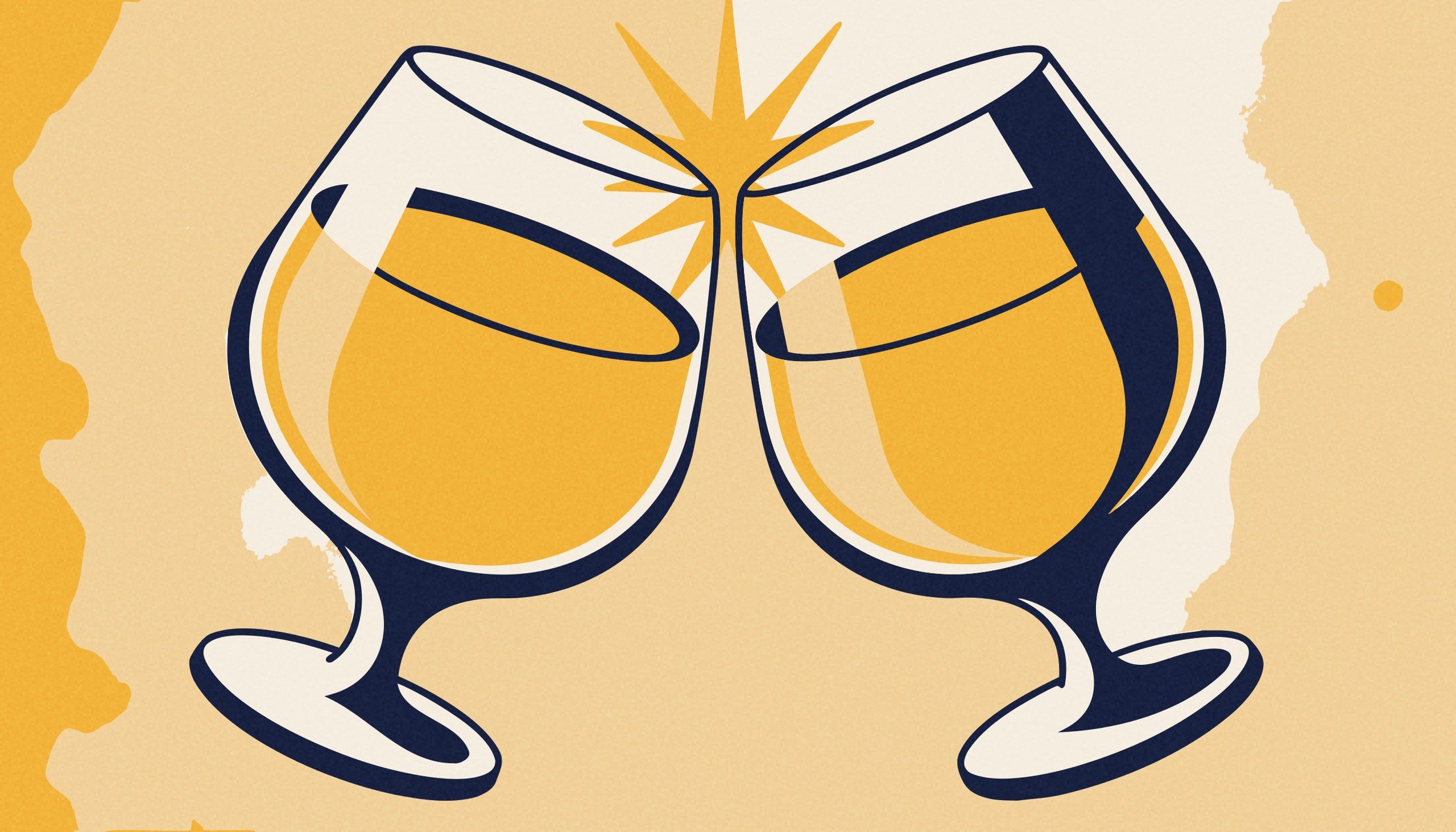
A glass that knocks against another
Two glasses meet. A little “ting” rings out. Everyone looks each other in the eye, then they drink. Nobody really decided this one day. The gesture passes from table to table, from generation to generation, with no instruction manual.
And yet we perform it almost without thinking. Lifting your glass, tapping it against your neighbour’s, catching their gaze for a second: here is a ritual that countless tables share without ever having explained it to themselves. And when you stop to take it apart, you stumble onto something unexpected.
The poison legend doesn’t hold up
The story told most often is the prettiest, and the most false. People claim that in the Middle Ages, clinking glasses was a way to mix the drinks: by knocking the cups hard, a little wine would jump from one glass to another. If you had slipped some poison into your neighbour’s cup, you risked catching a drop yourself. So clinking proved you weren’t trying to poison anyone.
Except nothing confirms it. No serious medieval text describes this practice. The historians who have dug into the question have found no solid trace of any deliberate mixing. And physically, it doesn’t work: you’d have to smash the glasses to transfer any useful amount of liquid.
The truth is simpler. If you really wanted to protect yourself from a poisoner, the best safeguard already existed: make them drink first, right in front of you.
A gesture that says “I trust you”
The clink itself may come from somewhere else. People sometimes say the sound was meant to scare off evil spirits, the way church bells do. Hard to prove, but this idea points to something true: clinking is above all a social act.
Look at what really happens around a table. We raise our glasses together, at the very same moment. We search for each other’s eyes. We sync up a tiny gesture. The clink isn’t the goal, it’s the sound proof that we’re sharing the instant. Drinking alone in your corner isn’t toasting. Toasting means folding everyone into the same second.
The French word says it well. Trinquer comes from the German trinken, to drink, and only took on the sense of “raising a toast” in the 17th century. The gesture comes before the sip. First we connect, then we drink.
Why the gaze matters as much as the glass
One rule survives almost everywhere: you have to look each other in the eye at the moment of the clink. In Germany, people even joke about seven years of bad luck for anyone who looks away. Nobody really believes it. But everyone plays along.
This detail reveals the heart of it. The clinking glass calls on hearing. The gaze adds sight. The hand offering the glass brings in the gesture. Toasting recruits three senses at once to build a single message: we are here, together, and we’re confirming it to each other. It’s less a matter of hygiene or poison than a liquid handshake.
So next time, forget the poisoner legend. The little “ting” before the sip protects from nothing. It connects, simply. And maybe that’s why we never tire of it.