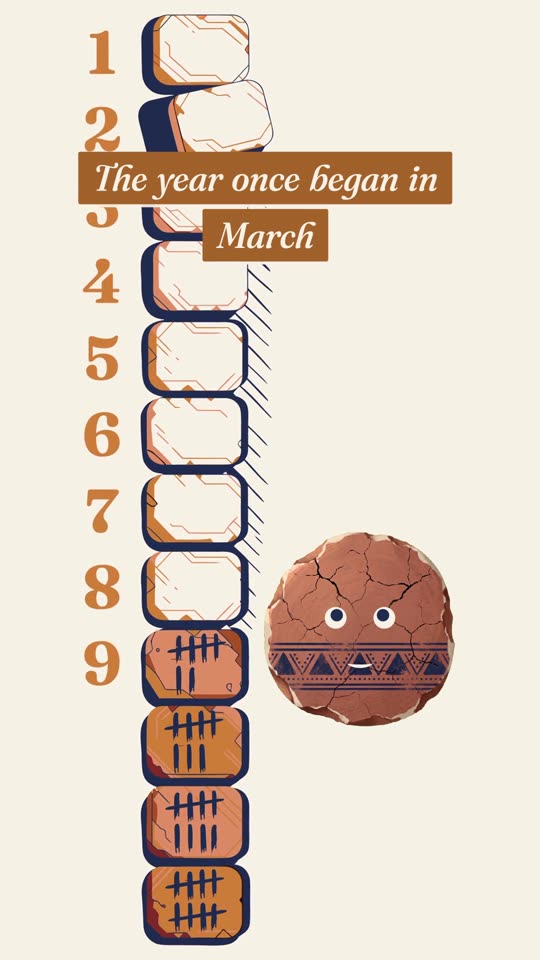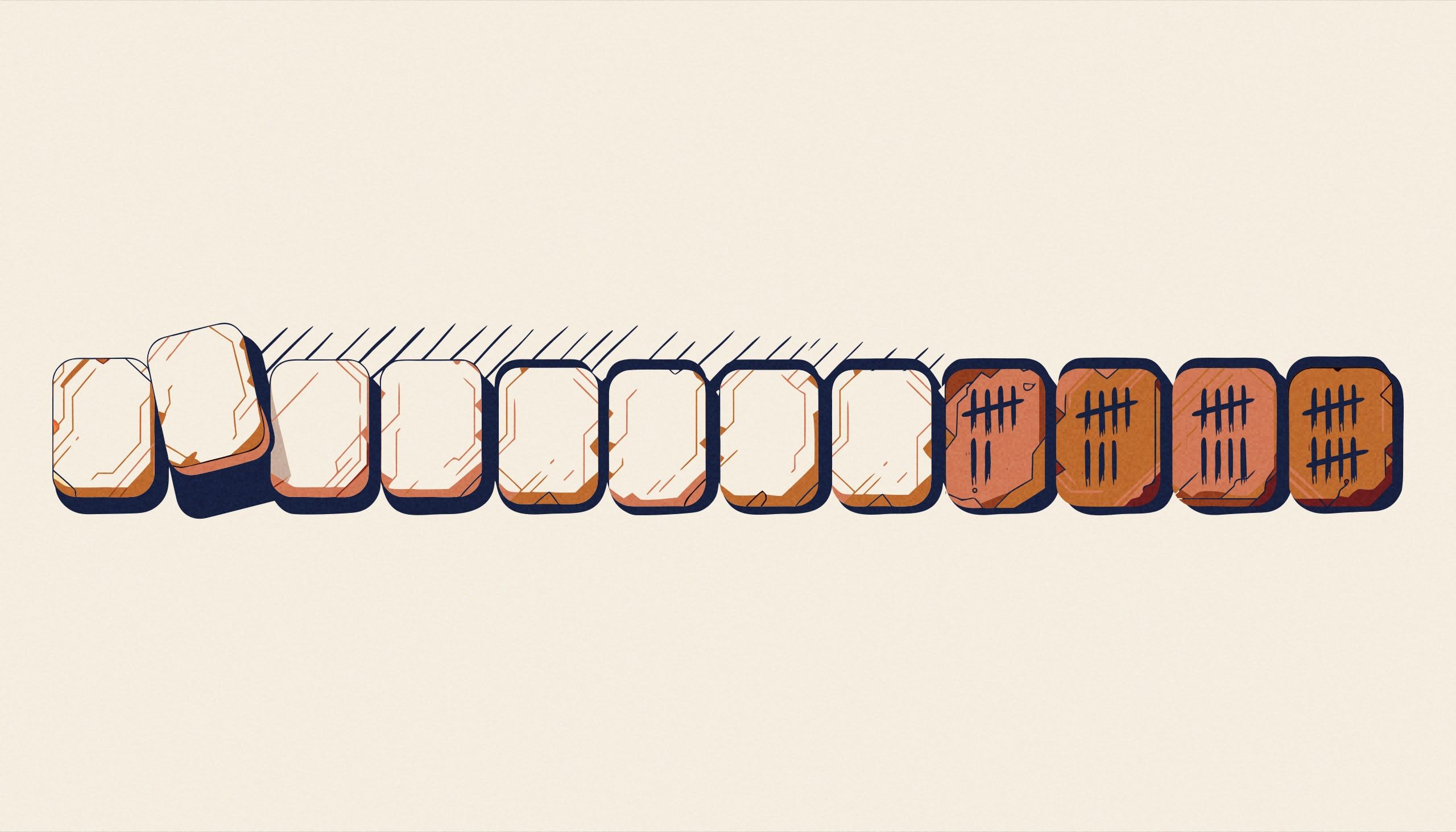
Four numbers, all wrong by the same amount
September says seven. October says eight. November says nine. December says ten. Yet September is the ninth month of our year, October the tenth, November the eleventh, December the twelfth. Four names, four numbers, and every one of them is off by exactly two.
These names come from Latin. English inherited them, as did other European languages, though not all of them. September comes from septem, seven. October from octo, eight. November from novem, nine. December from decem, ten.
The year that began in March
According to Roman tradition, transmitted by authors writing long after the events they describe, the earliest year had only ten months. It opened in March and closed in December: 304 days in total. In that arrangement, every numerical name told the truth. Quintilis was the fifth, Sextilis the sixth, September the seventh, October the eighth.
Then, still according to tradition, two months were added: January and February. The year grew to 355 days. The crucial point: these two months were inserted before March, now opening the sequence. It is this placement that shifts every rank by two. Macrobius observes that the month kept the name of its former position “although it no longer seemed to be the fifth, but the seventh”. Plutarch makes the same point: when January and February were placed before March, the month still called Quintilis, or fifth, was in fact being counted seventh.
The names once told the truth. The counting moved; they did not.
The consular year shifts, the names stay
In 153 BC, something attested happens: Roman consuls begin their term on 1 January. Before that date, they could take office on the Ides of March, the 15th. The ancient source gives a terse reason: a rebellion in Hispania. Nothing more.
This decision moves the start of the political year. Not one month changes its name, not one changes its place. The numerical names, already frozen labels, stay where they are. The mismatch is not an error committed that day: it already existed, produced by the placement of January and February before March. What 153 BC confirms is that no authority took it upon itself to bring the numbers back in line with the new starting point.
Renaming was possible; nobody renumbered
Proof that changing a month’s name posed no technical problem: two renamings held. Julius and Augustus replaced Quintilis and Sextilis, and those names stuck. The Julian reform of 46 BC, which realigned the seasons by extending the year to 365 days, touched no names.
Other emperors tried to rename months. Caligula, Nero, Domitian, Commodus: each time, the original names were eventually restored.
Why did nobody ever correct the four wrong numbers? Shared numbering outlives its original logic because the cost of replacing it falls on everyone. Changing a month’s name forces everyone to readjust at once, whereas a false etymology bothers no one in daily life. Nobody hears the number buried inside these names any more: you have to go back to Latin to perceive that September says “seven”. Once the word no longer carries its meaning to the ear, there is no urgency to fix it.
Thirteen Caesars
The Senate proposed giving Tiberius, Augustus’s successor, a month bearing his name. Tiberius refused. According to Cassius Dio, writing two centuries later, he is said to have replied: what will you do, then, if there are thirteen Caesars?
The question was never asked about the numbers. Nobody proposed renumbering September, October, November and December. The Senate offered months to emperors, not corrections to numbers.