The first birthday no one remembers
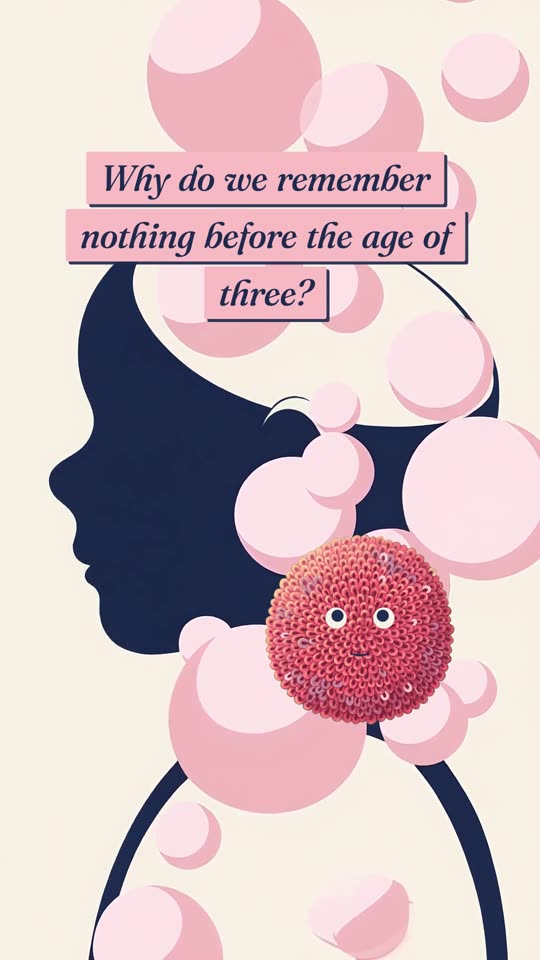
Ask an adult for their oldest memory. They’ll tell you about a bike fall, a house move, a dog. Almost never from before age three. Yet at that age, they had already learned to walk, to say dozens of words, to pick their parents’ faces out of a thousand. An enormous amount of work. And nothing of it remains.
Scientists call this infantile amnesia. It isn’t that nothing happens in a baby’s head. It’s that nothing sticks.
A brain forever tidying up
A toddler’s brain is like a building site open day and night. It makes thousands of new neurons, above all in a small region curved like a seahorse, the hippocampus, the memory archive room.
Researchers see there one of the explanations: as they settle in, the new neurons would jostle the connections already in place. It’s like writing on a slate you never stop wiping clean to write over. An experiment on baby mice in 2014 points that way: when you slow this neuron factory down, the young mice keep their memories longer. In humans, this stays a hypothesis, alongside others.
Shelving a memory takes words
The baby is missing something else: language. A memory you keep isn’t just an image. It’s a little story you tell yourself: “we went to the sea, it was hot, I was scared of the waves”. Without words to place events in time, the memory drifts and shelves nowhere.
Around three or four, the child starts saying “yesterday”, “before”, “when I was little”. That’s when memory finally finds its shelves. This kind of dated, narrated memory has a name: episodic memory. It needs language to stand up.
Nothing is truly lost
Here’s the most surprising part. Even without conscious memories, those first years don’t evaporate. The way you were rocked, reassured, fed, all of it is written elsewhere in the brain, in gestures and emotions rather than in stories. A child loved early on keeps that security without ever being able to tell it.
So no, early childhood isn’t a black hole. It’s a book written in invisible ink, whose presence you feel on every page without ever being able to reread it.